

There’s a piece of infrastructure almost nobody thinks about until it fails, and I want to talk about it honestly, because I think the people I work with deserve to understand the ground they’re standing on. Every time your bank timestamps a transaction, every time a cell tower hands your call to the next tower without dropping it, every time the power grid keeps itself in sync across an entire region — all of it depends on a signal from space so precise it’s measured in billionths of a second. That signal comes from GPS. And I’ve come to believe, with real conviction, that we’ve built too much of modern life on a single, quietly fragile source of time.
What “timing” actually means, and why it matters more than position
Most people know GPS as the thing that tells your phone where you are. That’s the least important part of what it does for the economy. The far bigger job is timing — GPS satellites carry atomic clocks so precise that they let systems all over the world agree, to the nanosecond, on what time it is. Financial markets use that shared clock to timestamp trades — regulators like MiFID II in Europe require timestamp accuracy traceable to within a hundred microseconds of UTC for high-frequency trading. Telecom networks use it to synchronize cell towers so your call doesn’t drop mid-handoff. Power grids use it to keep phasor measurement units in sync across thousands of miles, which is part of what keeps the lights on during high demand. This is what people in the field call PNT — Positioning, Navigation, and Timing — and timing is the part I want you to actually worry about.
Why I don’t think we should trust one signal this much
GPS signals are faint by the time they reach the ground — they’ve traveled over 12,000 miles from satellites broadcasting at roughly the power of a household lightbulb. That makes them remarkably easy to jam, and not much harder to spoof — to feed a receiver a fake signal that looks legitimate. This isn’t theoretical anymore. Aviation authorities have documented thousands of GPS spoofing and jamming incidents in conflict-adjacent airspace over the past few years, and the pattern is spreading, not shrinking. When I think about how much of our critical infrastructure quietly assumes GPS will simply always be there, I feel a real responsibility to say plainly: it might not be.
Where quantum computing enters this story — in two very different ways
This is the part I find genuinely fascinating, and it’s why I wanted to write about timing and quantum computing together rather than separately.
1. Quantum computing is a threat to how we secure timing signals
Military GPS signals, and the newer authentication protocols being built for civil signals (the U.S. is developing one called Chimera), rely on cryptography to prove a timing signal is genuine and not spoofed. That cryptography is exactly the kind a sufficiently powerful quantum computer could eventually break. It’s the same “harvest now, decrypt later” risk I’ve written about before, applied to something even more immediate than financial data: the authenticity of the clock our infrastructure trusts.
2. Quantum sensing is quietly becoming the answer
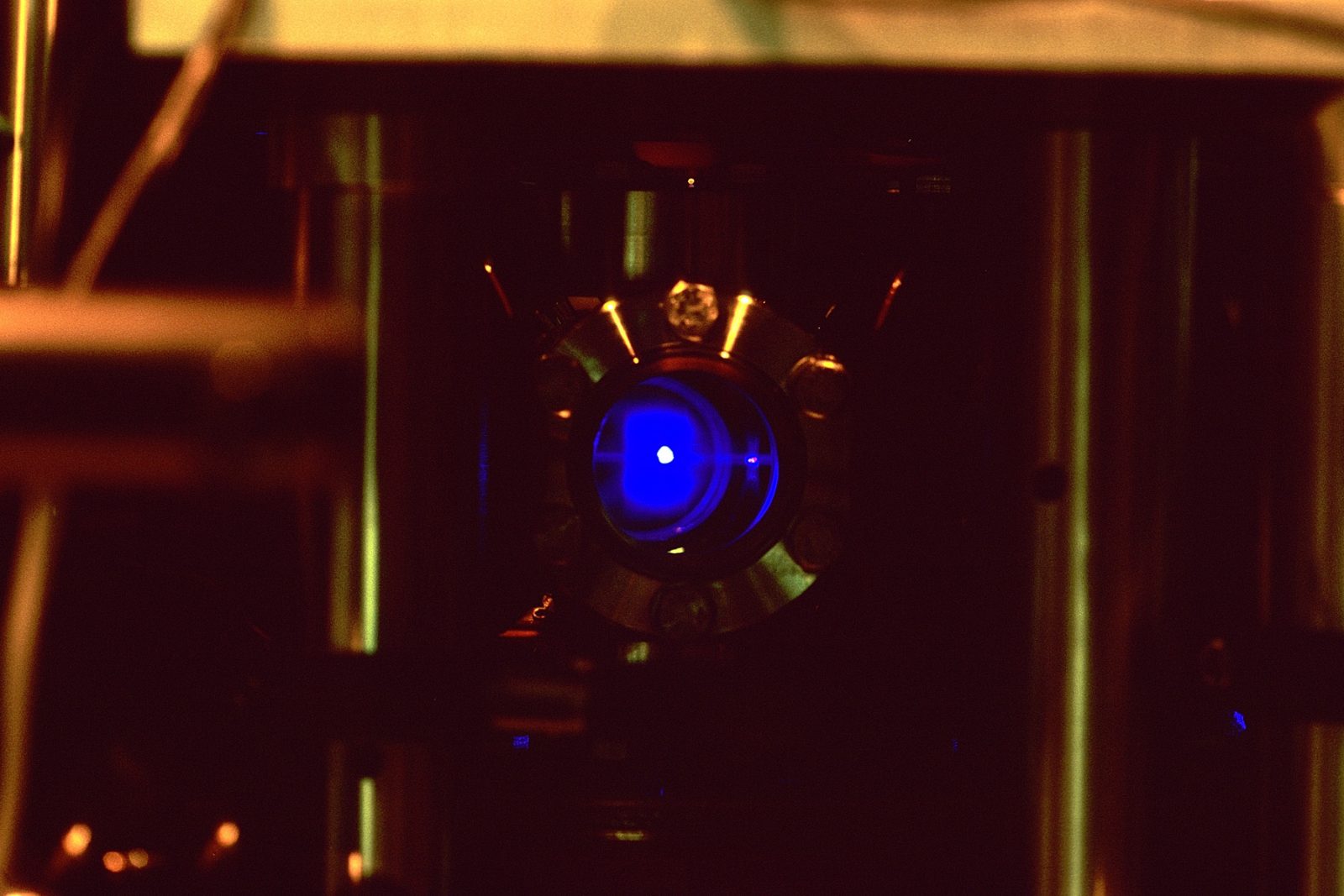
Here’s the hopeful half of the story, and I don’t think it gets told enough. A closely related but distinct field — quantum sensing, not quantum computing — is producing chip-scale atomic clocks and cold-atom interferometers precise enough to keep accurate time and navigate without any GPS signal at all. This is the leading edge of what’s called Alt-PNT: alternative positioning, navigation, and timing that doesn’t depend on satellites anyone can jam or spoof. The same quantum research investment, and often the same physicists, are behind both stories — the risk to GPS security and the technology that could finally free us from depending on GPS alone. I find something almost poetic in that.
Why this belongs on your desk, not just a defense planner’s
If your business depends on precise timestamping — financial services, telecom, energy, healthcare systems with regulatory audit trails — or if you operate anything connected to critical infrastructure, I want you to know that Alt-PNT resilience is no longer a purely military or government concern. The U.S. passed the National Timing Resilience and Security Act back in 2018 specifically because policymakers recognized how dangerously concentrated our dependence on GPS timing had become, and the private sector has been slow to follow that same logic into its own operations. I’d rather you hear that from me now, calmly, than from a regulator or an outage later.
What I’d actually ask you to do
1. Ask, plainly: does any part of your operation — trading systems, network infrastructure, industrial control systems — depend on GPS timing with no independent backup? Many businesses genuinely don’t know the answer until they ask.
2. If you’re in finance, telecom, or energy specifically, know that terrestrial and quantum-sensing alt-PNT solutions are moving from research into early commercial deployment now. This is worth a conversation with your infrastructure providers this year, not a project to shelve.
3. For nearly everyone else, this is context, not a to-do list — but it’s context I think every operator deserves to have, the same way I’d want to know it myself before I needed it.
I care about this because I’ve spent my career helping people see around corners before a crisis forces the view on them. Quantum computing, timing infrastructure, and Alt-PNT sit at exactly that kind of corner right now — quiet, technical, and easy to ignore, right up until it isn’t. If you’d like to talk through where your business actually sits on this, I’d welcome that conversation. Request a consultation, or explore how my team at Interactive Intel, our dedicated AI and emerging-technology practice, thinks about technology risk like this every day.
